
Myopia Management
in New Jersey
Helping Children See Clearly Today
While Protecting Their Vision for Tomorrow
Myopia, also known as nearsightedness, is more than just needing stronger glasses. It is a progressive condition where the eye grows too long, increasing the risk of serious eye disease later in life.
At Advanced Eyecare, we provide evidence-based myopia management for children using advanced technology, axial length measurements, and personalized treatment plans designed to slow myopia progression.

Why Myopia
Matters
Myopia Is More Than a
Glasses Prescription
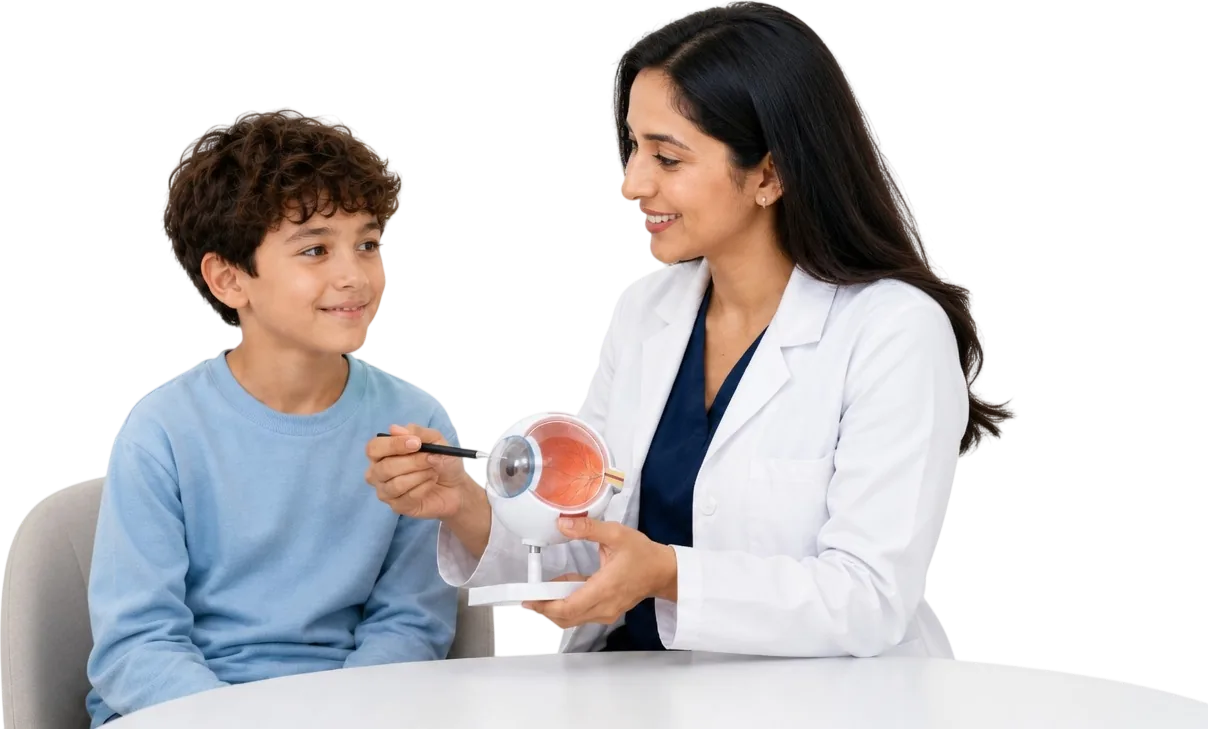
Many parents think myopia simply means their child needs glasses to see the board at school. While glasses improve vision, they do not stop the eye from continuing to grow.
As the eye becomes longer, the risk of future eye disease increases, including:
The goal of myopia management is not just to help your child see clearly today. The goal is to slow eye growth and protect lifelong vision.
Retinal Detachment
Glaucoma
Cataracts
Myopic Macular Degeneration
There Is No Safe
Level of Myopia
Every Diopter Matters
There is no known safe level of myopia.

Even low levels of nearsightedness increase lifetime risk of eye disease compared to eyes without myopia.
Every additional 1.00 diopter of myopia increases the risk of myopic macular degeneration by approximately 67%.

Reducing myopia progression by just 1.00 diopter may reduce the lifetime risk of myopic maculopathy by approximately 40%.
This is why early treatment matters. Every diopter prevented can make a meaningful difference in your child’s future eye health.

EVERY DIOPTER MATTERS
Why Slowing Myopia Makes a Difference
Myopia (nearsightedness) is a progressive eye disease. As the eye grows longer, the risk of serious, sight-threatening eye conditions increases, starting even at low levels of myopia.
THE RESEARCH IS CLEAR
Every additional 1.00 diopter (D) of myopia increases the risk of myopic macular degeneration by approximately 67%.
Slowing myopia progression by just 1.00 D may reduce the lifetime risk of myopic maculopathy by approximately 40%.
Click to explore the complete data and evidence.
+1.00 D
increases risk of myopic macular degeneration by approximately 67%
−1.00 D
prevented reduces lifetime risk of myopic maculopathy by approximately 40%
Every diopter
prevented matters.
Lower lifetime myopia means lower lifetime risk.
Reducing myopia progression by just 1.00 diopter may significantly reduce the lifetime risk of myopic eye disease.
The Complete Data and Evidence
Every diopter matters, and here is why
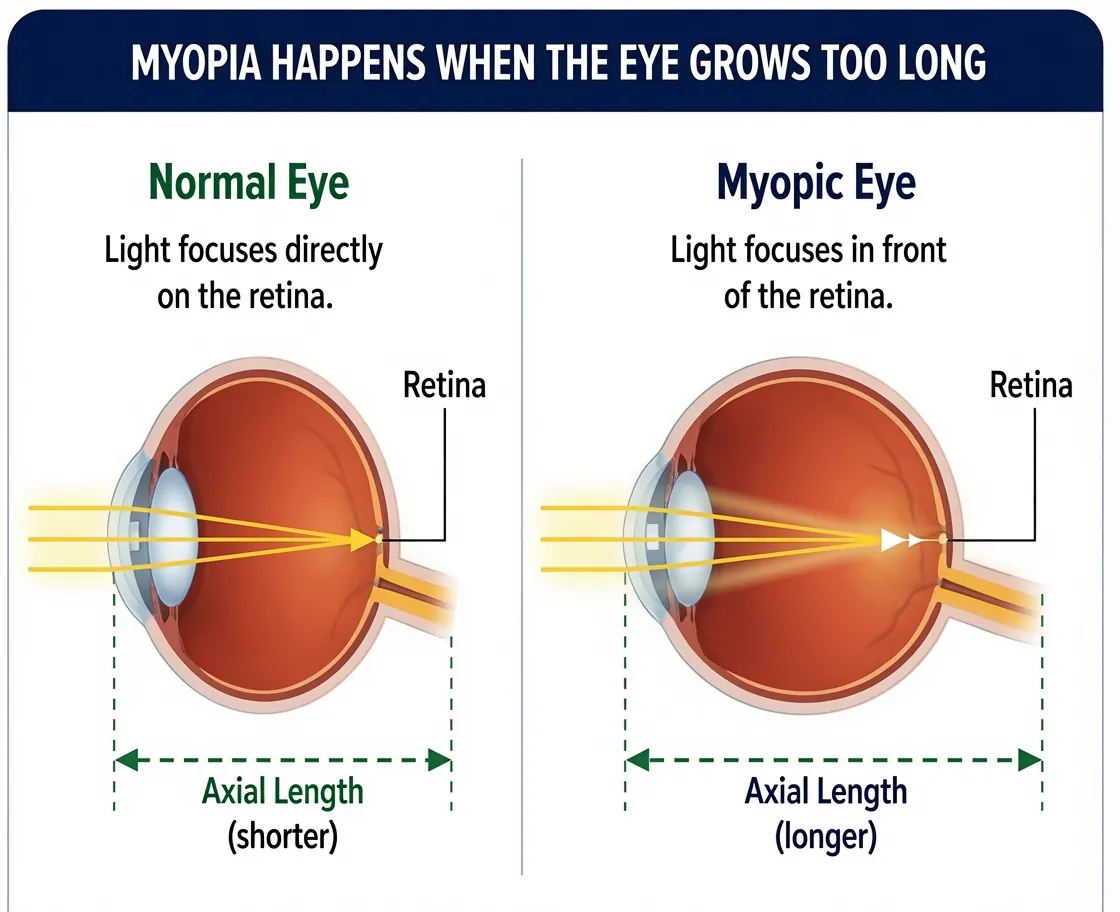
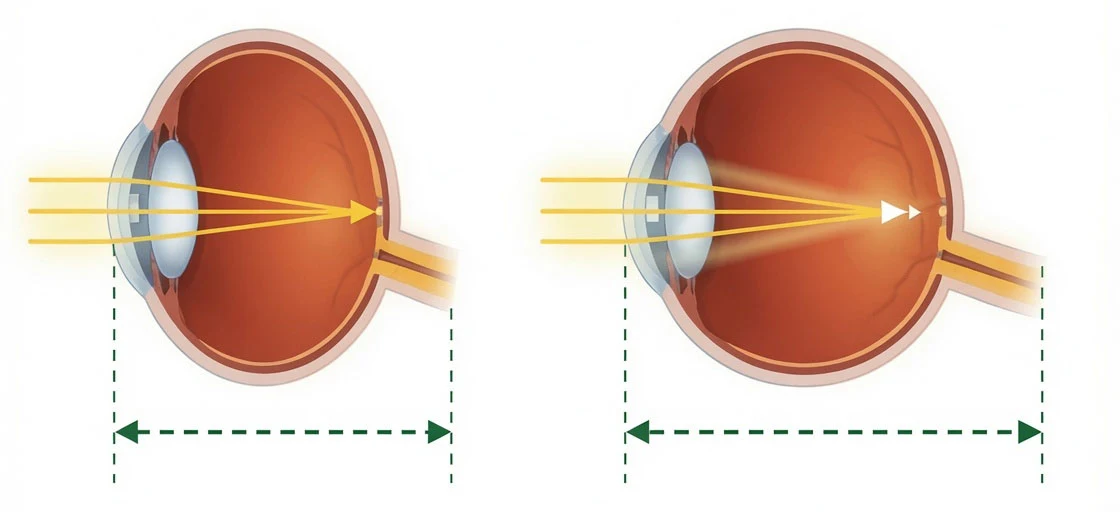
MYOPIA HAPPENS WHEN THE EYE GROWS TOO LONG
Normal Eye
Light focuses directly
on the retina.
Myopic Eye
Light focuses in front
of the retina.
Axial Length
(shorter)
Axial Length
(longer)
INDICATOR OF EYE GROWTH
AND FUTURE RISK
WHY WE ARE MEASURING
AXIAL LENGTH
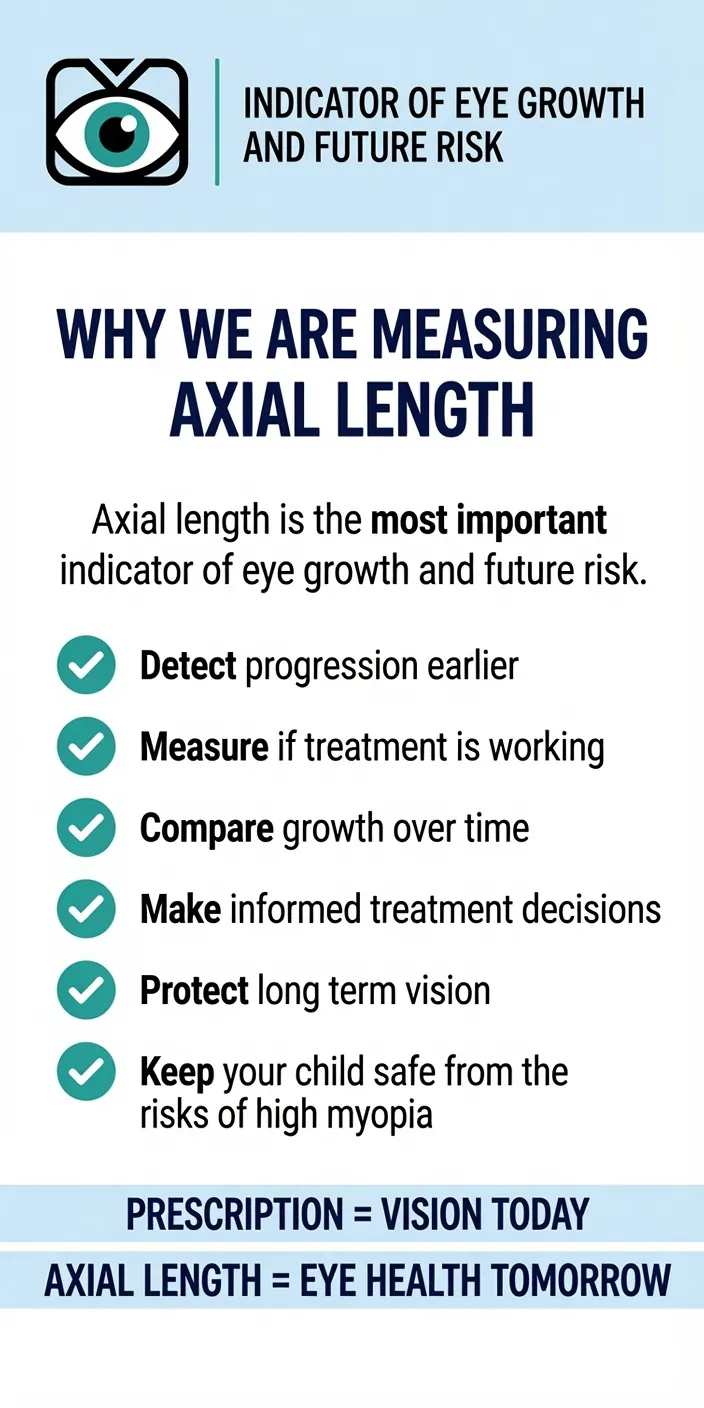
Axial length is the most important
indicator of eye growth and future risk.
Detect progression earlier
Measure if treatment is working
Compare growth over time
Make informed treatment decisions
Protect long term vision
Keep your child safe from the risks of high myopia
PRESCRIPTION = VISION TODAY
AXIAL LENGTH = EYE HEALTH TOMORROW
LIFETIME RISK INCREASES WITH HIGHER MYOPIA
Relative Risk Compared to an Eye with No Myopia
|
REFRACTIVE |
 RETINAL DETACHMENT |
 GLAUCOMA |
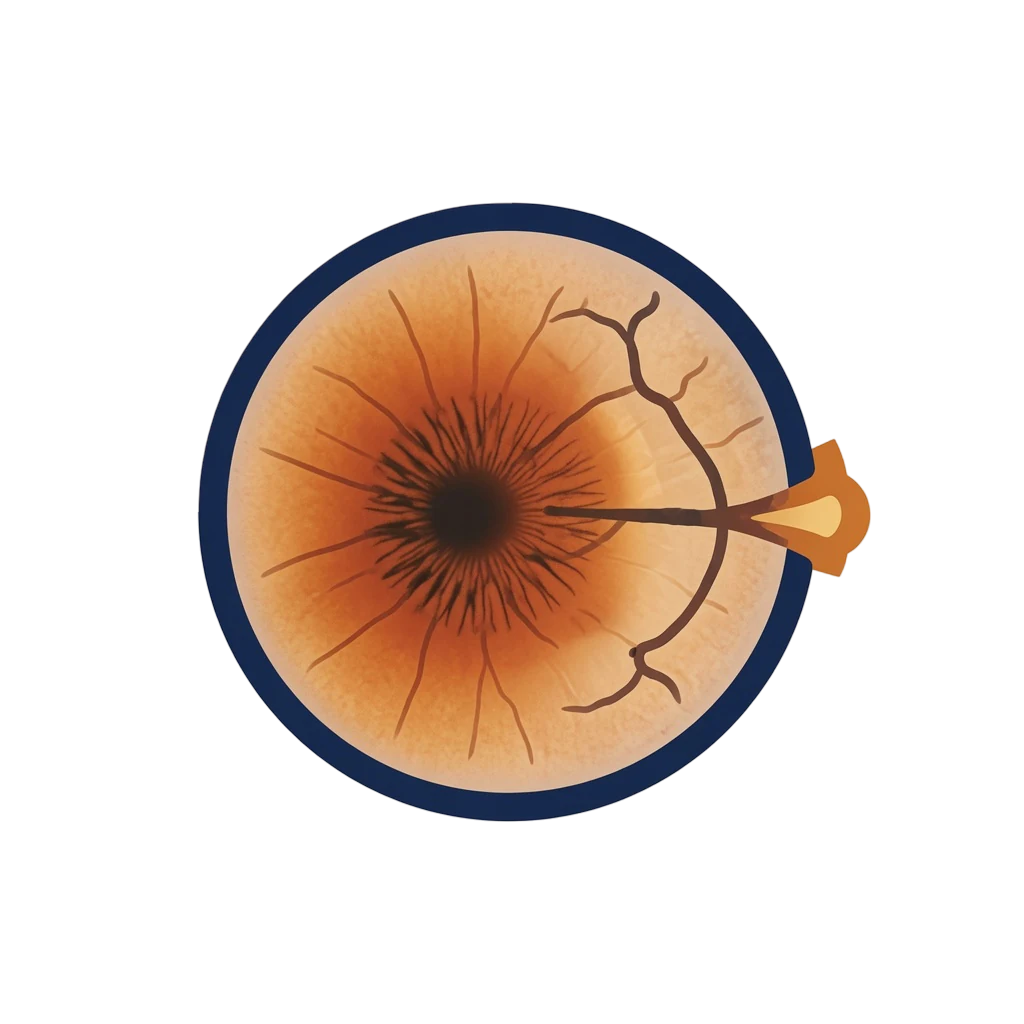 MYOPIC MACULAR DEGENERATION |
 CATARACT |
|---|---|---|---|---|
|
-1.00 D |
2.2x |
2.3x |
2.2x |
1.5x |
|
-3.00 D |
9.7x |
3.3x |
9.7x |
3.1x |
|
-5.00 D |
21.5x |
5.1x |
40.6x |
5.5x |
|
-6.00 D |
44.2x |
6.6x |
126.8x |
7.4x |
Why We Measure
Axial Length
The Most Important Number
You May Have Never Heard Of
At Advanced Eyecare, we measure axial length as part of our myopia management program.
Axial length is the measurement of the eye from front to back. As myopia progresses, the eye typically becomes longer. This elongation places stress on the retina and other delicate structures inside the eye.
A glasses prescription tells us how blurry your child’s vision is today. Axial length tells us how the eye is growing over time.
By measuring axial length, we can:
Detect progression earlier
Monitor whether treatment is working
Compare eye growth over time
Adjust treatment when needed
Focus on long-term eye health
Prescription = vision today. Axial length = eye health tomorrow.
Many eye care offices monitor only prescription changes.
We believe axial length measurement is essential for modern myopia management.
Myopia Happens When
the Eye Grows Too Long
Understanding how myopia affects the eye helps us understand why controlling eye growth is so important.
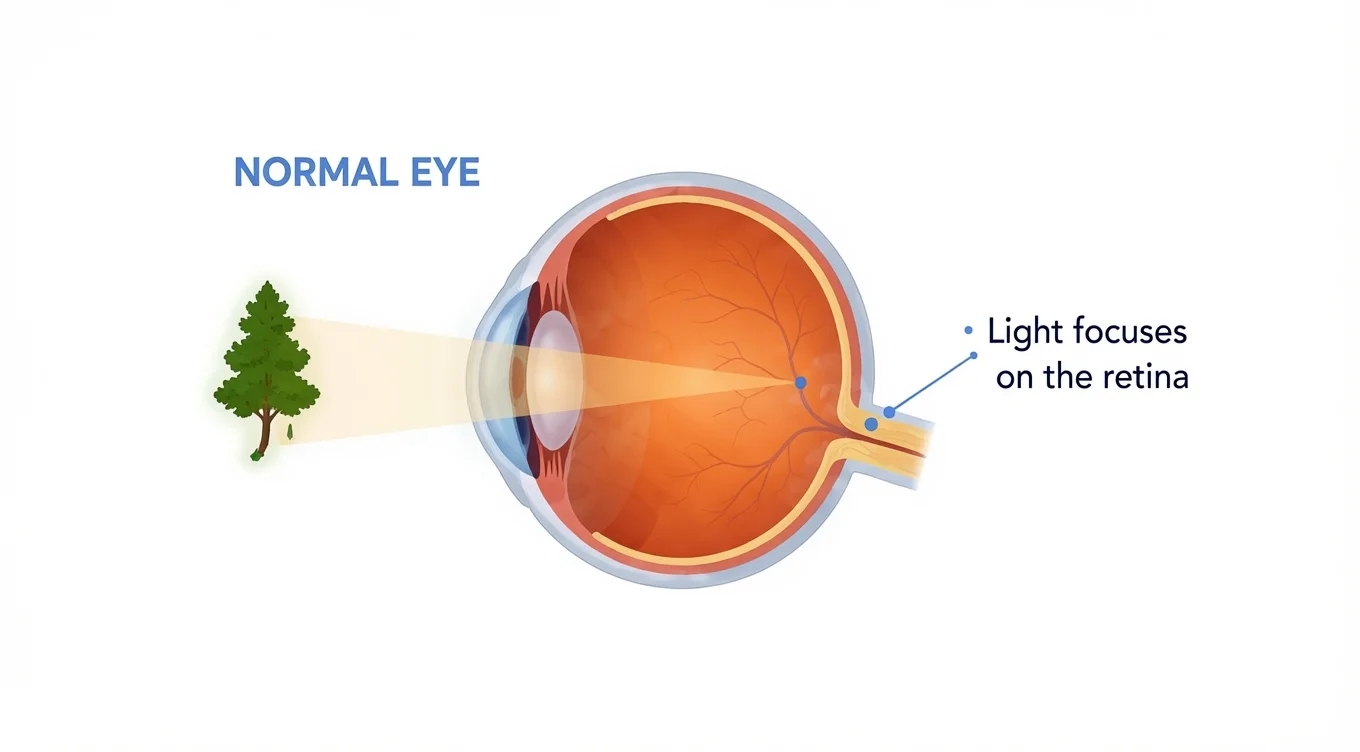
In a normal eye, light focuses directly on the retina.
In a myopic eye, the eye is longer than normal, causing light to focus in front of the retina.
The more the eye elongates, the greater the lifetime risk of vision-threatening complications.
Slow eye growth today. Protect their vision for life.
NORMAL EYE
MYOPIC EYE
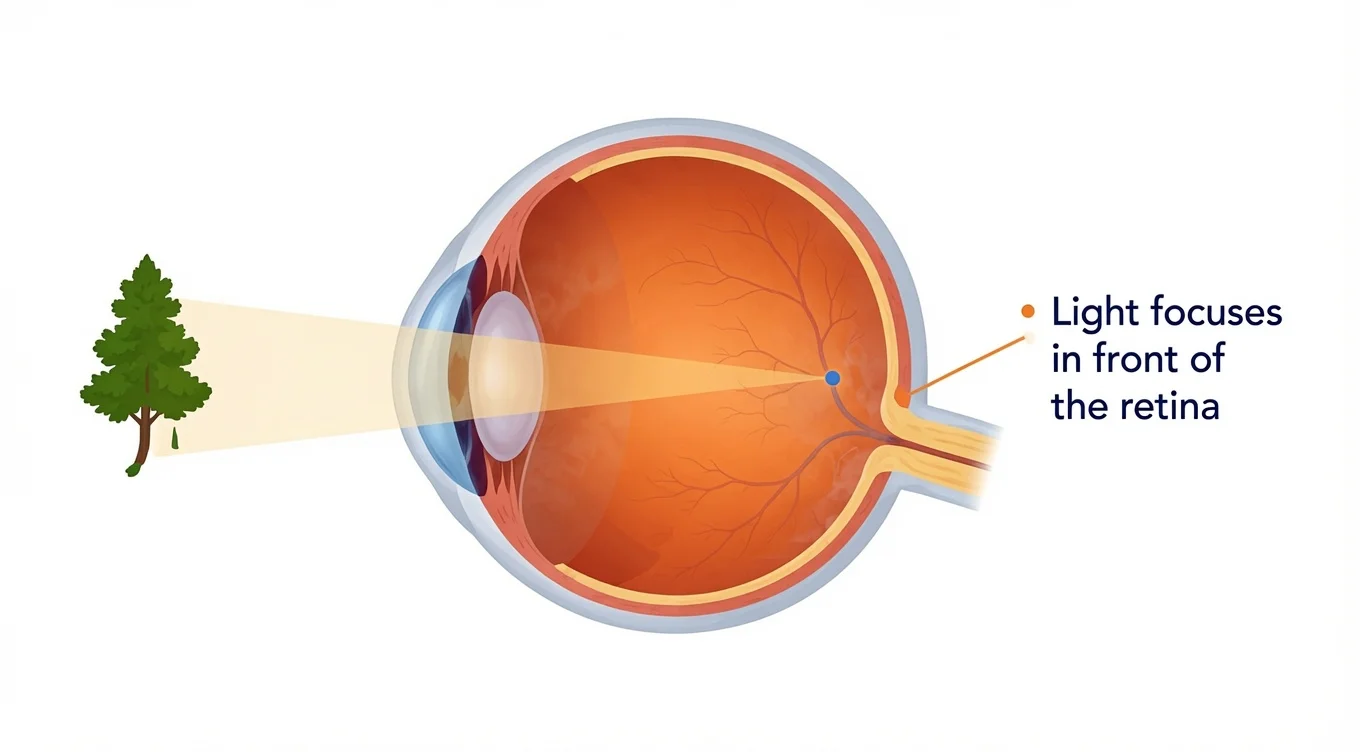
That is why slowing eye growth is the primary goal of myopia management.

Our Treatment Options
Evidence-Based Ways to Slow Myopia Progression
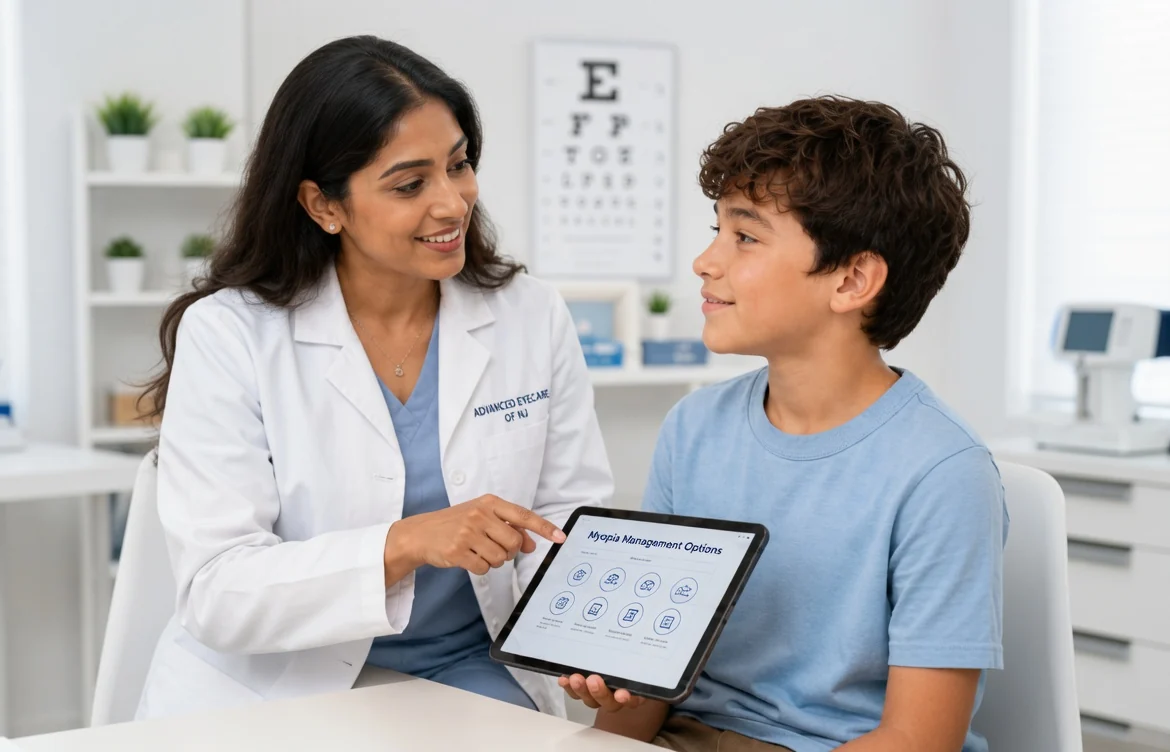
We offer multiple treatment options based on your child’s age, prescription, lifestyle, eye shape, and rate of progression.
1
Orthokeratology (Ortho-K)
Custom-designed lenses worn while sleeping to gently reshape the cornea overnight so many children can see clearly during the day without glasses or daytime contact lenses.
2

Multifocal Soft Contact Lenses
Specialty soft contact lenses worn during the day to provide clear vision while helping slow myopia progression. Comfortable and convenient for many active children.
3
Low-Dose Atropine Eye Drops
Prescription eye drops used at bedtime to help slow myopia progression. May be used alone or combined with other treatments depending on your child’s needs.
4

Myopia Control Glasses
Specially designed lenses that look like regular glasses but use advanced optical technology to help slow eye growth while your child wears them.
5

Lifestyle Guidance
Healthy visual habits can support myopia control, including more outdoor time, regular breaks from near work, balanced screen use, proper lighting, and appropriate working distance.
Every treatment plan is personalized to your child’s eyes, lifestyle, and long-term vision goals.
Our Comprehensive
Myopia Evaluation
Advanced testing. Personalized care. Better results.
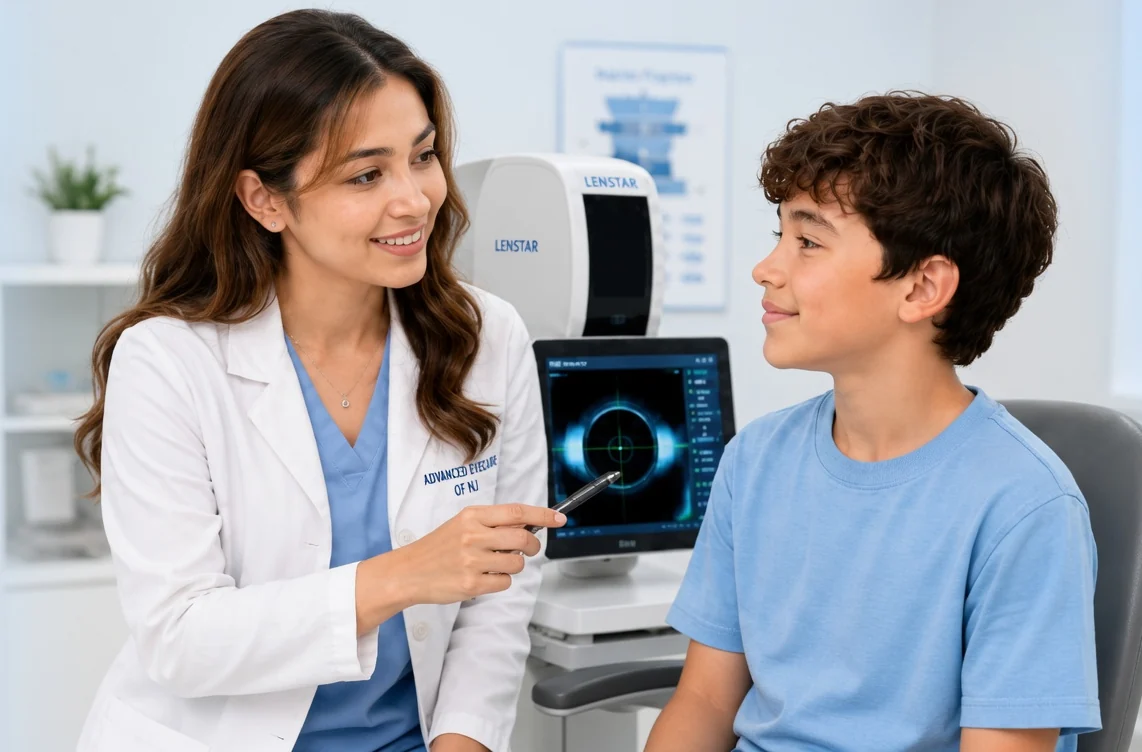
A thorough evaluation is the first step in creating an effective myopia management plan.
Our advanced diagnostic technology gives us a complete picture of your child’s eye health and helps us track changes over time with precision.
Our Myopia Evaluation Includes:
Detailed vision and eye health examination
including cycloplegic refraction when needed
Axial length measurement
to monitor eye growth
Corneal topography
for Orthokeratology (Ortho-K) candidates
Lifestyle and visual behavior assessment
to understand risk factors
Personalized treatment recommendation
based on your child’s unique needs
Ongoing monitoring
to track progress and adjust the plan
Why a Comprehensive Evaluation Matters
Detect myopia early, even before symptoms appear
Accurately track eye growth and treatment progress
Reduce future risk of serious eye disease
Give your child the best chance for a lifetime of clear vision
Better data leads to better decisions
and better long-term outcomes for your child.
Schedule a Myopia Management Consultation Today
Early action can make all the difference.
Why Early Treatment Matters
Earlier treatment gives us the best
opportunity to protect lifelong vision.
The younger a child becomes nearsighted, the more years their eyes have to continue progressing.
Starting treatment early gives us the best opportunity to:
Slow eye growth
Helps slow the elongation of the eye, the root cause of myopia progression.
Reduce prescription changes
Minimizes the need for frequent updates to the glasses prescription.

Lower future disease risk
Lower levels of myopia are associated with a reduced risk of serious eye diseases later in life.

Protect long-term vision
Preserves clear, healthy vision for more choices and a better quality of life.
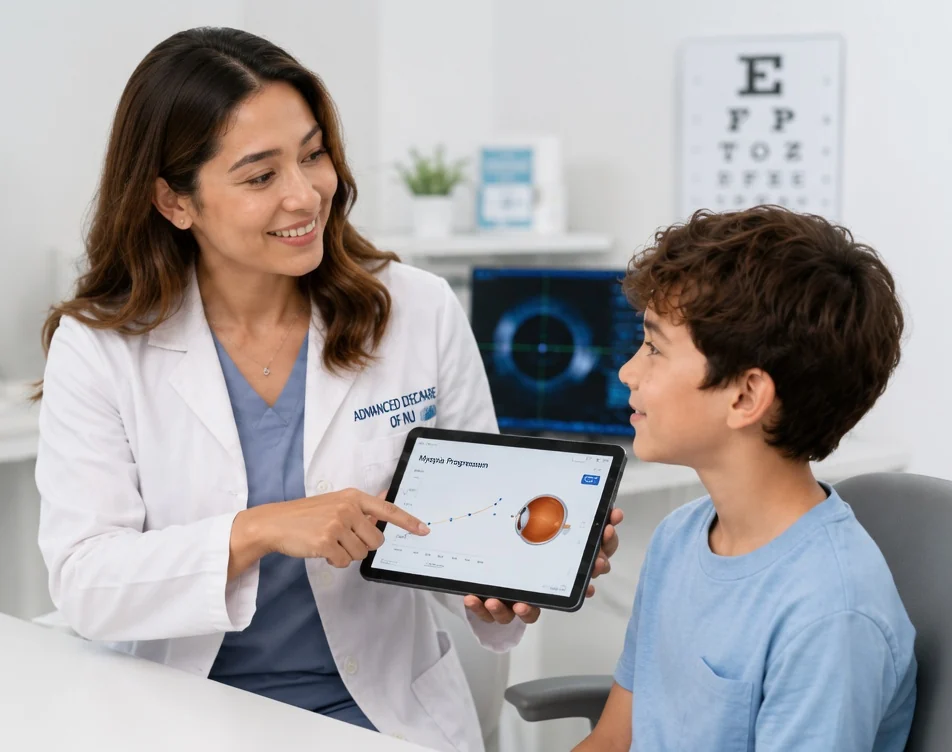
Our goal is simple:
Less eye growth. Lower prescription.
Healthier eyes for life.
Early action can make all the difference.